

Pregnancy changes almost everything about how your body moves, and it’s completely normal to wonder what kind of exercise is safe, what you should avoid, and how to rebuild strength after the baby arrives. This guide pulls together what our trainers teach every day in pre/post-natal personal training sessions: how to train safely through each stage of pregnancy, how to care for your pelvic floor, and how to return to exercise after birth without rushing it. If you’re looking for prenatal exercise in Winnipeg, or just want a sensible starting point you can follow at home, start here.
One thing before anything else: this guide is general information, not medical advice. Every pregnancy is different. Talk to your doctor, midwife, or obstetric care provider before starting or continuing an exercise program while pregnant or after giving birth, and keep them in the loop as things change.
Why Exercise During Pregnancy Is Worth It
For most people with uncomplicated pregnancies, staying active is not only safe but encouraged by major health organizations. Regular, moderate exercise during pregnancy is associated with better energy, better mood, healthier weight gain, and an easier time getting back to activity after birth. It also keeps the muscles you’ll rely on as a new parent — your back, hips, core, and shoulders — strong enough for the lifting and carrying that’s coming.
The key word is moderate. Pregnancy is not the time to chase personal records or push through exhaustion. It’s a season for maintaining, adapting, and preparing — and a well-built program does exactly that.
First Step: Get Cleared by Your Healthcare Provider
Before you do anything else, get the green light from your doctor or midwife. Some conditions — certain placenta issues, pre-eclampsia, a history of preterm labour, and others — change what’s appropriate, and only your care provider can assess that. This applies whether you exercised regularly before pregnancy or you’re starting fresh.
Once you’re cleared, a few red flags mean stop and call your provider: bleeding, dizziness, chest pain, unusual shortness of breath before you’ve even exerted yourself, painful contractions, or fluid leaking. Don’t push through any of these. Listening to your body isn’t a cliché here — it’s the whole strategy.
Safe Prenatal Exercise: What Changes and How to Adapt
Pregnancy hormones — particularly relaxin and progesterone — loosen your joints, ligaments, and connective tissue to prepare your body for birth. That’s useful for delivery, but it means your joints are less stable than usual and more vulnerable to strain. Training has to respect that.
Practical guidelines our trainers use
- Don’t start anything brand new and intense. Pregnancy is a good time to continue familiar movement patterns at reduced intensity, not to take up a demanding sport you’ve never done.
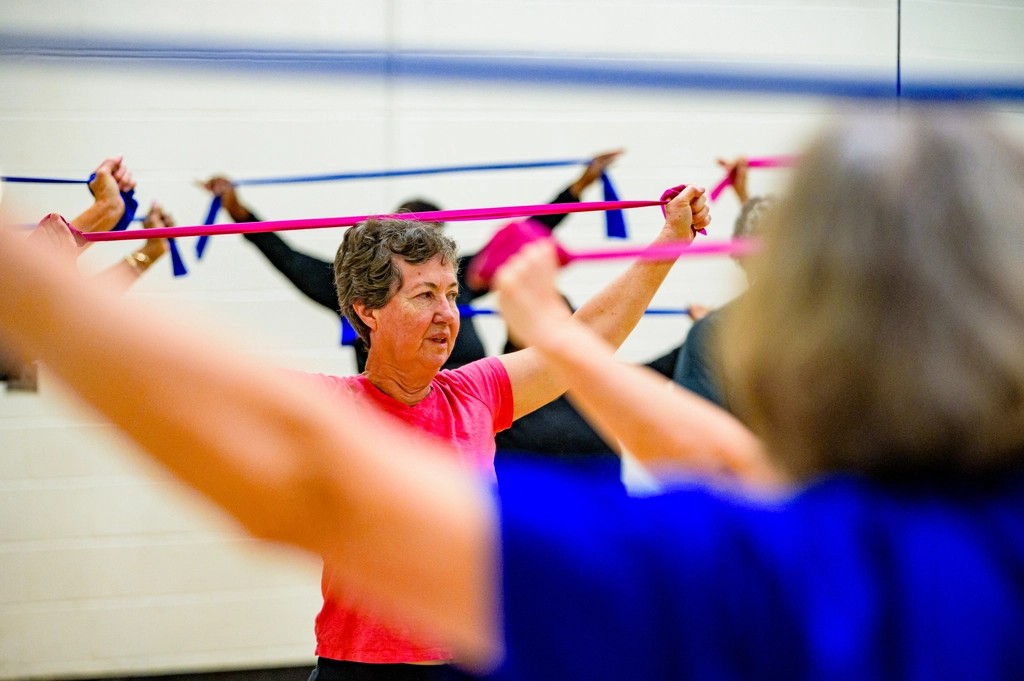
- Reduce the load significantly. Drop the weights well below your usual working loads. Resistance bands and bodyweight exercises are excellent choices. Heavy maximal lifting is off the table.
- Never hold your breath. Breathe continuously through every rep to keep blood flowing steadily. Straining against a held breath spikes internal pressure you don’t want.
- Avoid overheating. Train in a cool, well-ventilated space, use a fan, and take longer rest periods. Elevated core temperature for extended periods is a genuine concern during pregnancy, so err on the side of caution — especially in a warm gym or during a humid Winnipeg summer.
- Sip water constantly. A drink between every couple of exercises, not just at the end.
- Rest more than you think you need. Fatigue arrives faster during pregnancy. Longer breaks between sets are part of the program, not a failure.
Train the muscles pregnancy weakens
Pregnancy creates predictable muscle imbalances. Some muscles tend to weaken — the quads, glutes, abdominals, pelvic floor, and upper back. Others tend to get tight — the chest, shoulders, lower back, hamstrings, and calves. A good prenatal program strengthens the weak group and regularly stretches the tight group.
Upper-back and shoulder strengthening deserves special mention: you’re about to spend months carrying, feeding, and lifting a baby. Building that postural strength now pays off enormously later. If you want more background on building strength safely in general, our strength training guide covers technique fundamentals that apply here too.
A pregnancy workout you can do at home
You don’t need a gym for effective prenatal training. A low-impact home routine built around bodyweight and bands can target exactly the areas that need attention: glute bridges for the glutes and hamstrings, band rows and reverse flys for the upper back, supported squats for the legs, and gentle stretching for the chest, hips, and calves. Keep the intensity conversational — you should be able to talk through every set — and follow the breathing, hydration, and temperature guidelines above. During a Manitoba winter when getting out the door is half the battle, a short home session you’ll actually do beats a perfect gym session you’ll skip.
Pelvic Floor Exercises: The Foundation Most Programs Skip
Your pelvic floor is a sling of muscle at the base of your pelvis that supports your bladder, bowel, and uterus. Pregnancy and birth put enormous demand on it, and a weakened pelvic floor is a common reason new mothers deal with leaking, heaviness, or a core that just doesn’t feel connected. The good news: these muscles respond to training like any other muscle — but you have to learn to find them first.
Step one: learn to engage it with your breath
The foundation is a breathing exercise you can do lying down or seated:
- Inhale deeply into your belly, letting your rib cage expand outward like an umbrella opening.
- Exhale slowly while drawing your belly button in and up toward your rib cage, tightening your abdomen from the bottom upward.
- At the end of the exhale, you should feel a gentle lift through the pelvic floor and deep abdominal muscles — a sensation of drawing up, not bearing down.
- Repeat 15–20 slow breaths.
This mind-to-body connection is the whole point early on. Rushing to harder exercises before you can reliably feel and control the lift just builds bad habits.
Step two: progress gradually
Once you can engage the pelvic floor on demand, progress in stages: hold the gentle lift for a few seconds while breathing normally, then practice engaging it during simple movements like glute bridges, then during everyday tasks like standing up or lifting. The progression should feel unremarkable — small, consistent steps over weeks, not dramatic jumps.
If you experience leaking, pelvic pain, a feeling of pressure or bulging, or you simply can’t find the muscles, ask your doctor for a referral to a pelvic floor physiotherapist. This is a genuine medical specialty, and a proper assessment is worth far more than guessing.
Post-Natal Training: Coming Back After Birth
The rules of returning to exercise after birth are simple to state and hard to follow: get your provider’s clearance first (typically discussed at your postpartum checkup), start smaller than you think you need to, and rebuild from the inside out — pelvic floor and deep core first, then general strength, then intensity.
- Get cleared first. Recovery timelines differ a lot between deliveries, and a C-section changes the picture further. Your provider sets the start date, not the calendar.
- Re-learn the pelvic floor lift and core engagement before loading anything. The breathing exercise above is the starting point again.
- Listen to your body and rest when needed. You’re training on interrupted sleep and a recovering body. Some days the right workout is a walk — through the neighbourhood or a lap of a Winnipeg skywalk in January.
- Watch for warning signs — leaking, pelvic heaviness, pain, or a visible doming or gap along the midline of your abdomen (diastasis recti). Any of these mean scale back and get assessed.
The “baby and me” workout
Once you’re cleared and reconnected with your core, your baby can become the most convenient training partner you’ll ever have. A simple circuit — glute bridges, glute bridge in-and-outs, supine knee-ins, crunches with legs at 90 degrees, good mornings, and squats with a gentle torso twist — can all be done at home with your baby lying safely on your chest or held securely, adding a little resistance while you get face time together. Start with modest reps, rest freely, and finish each session with the pelvic floor breathing exercise. It’s a workout that grows with you: as your baby gains weight, so does your resistance.
Prenatal Exercise in Winnipeg: How Coaching Works at Flex Fitness
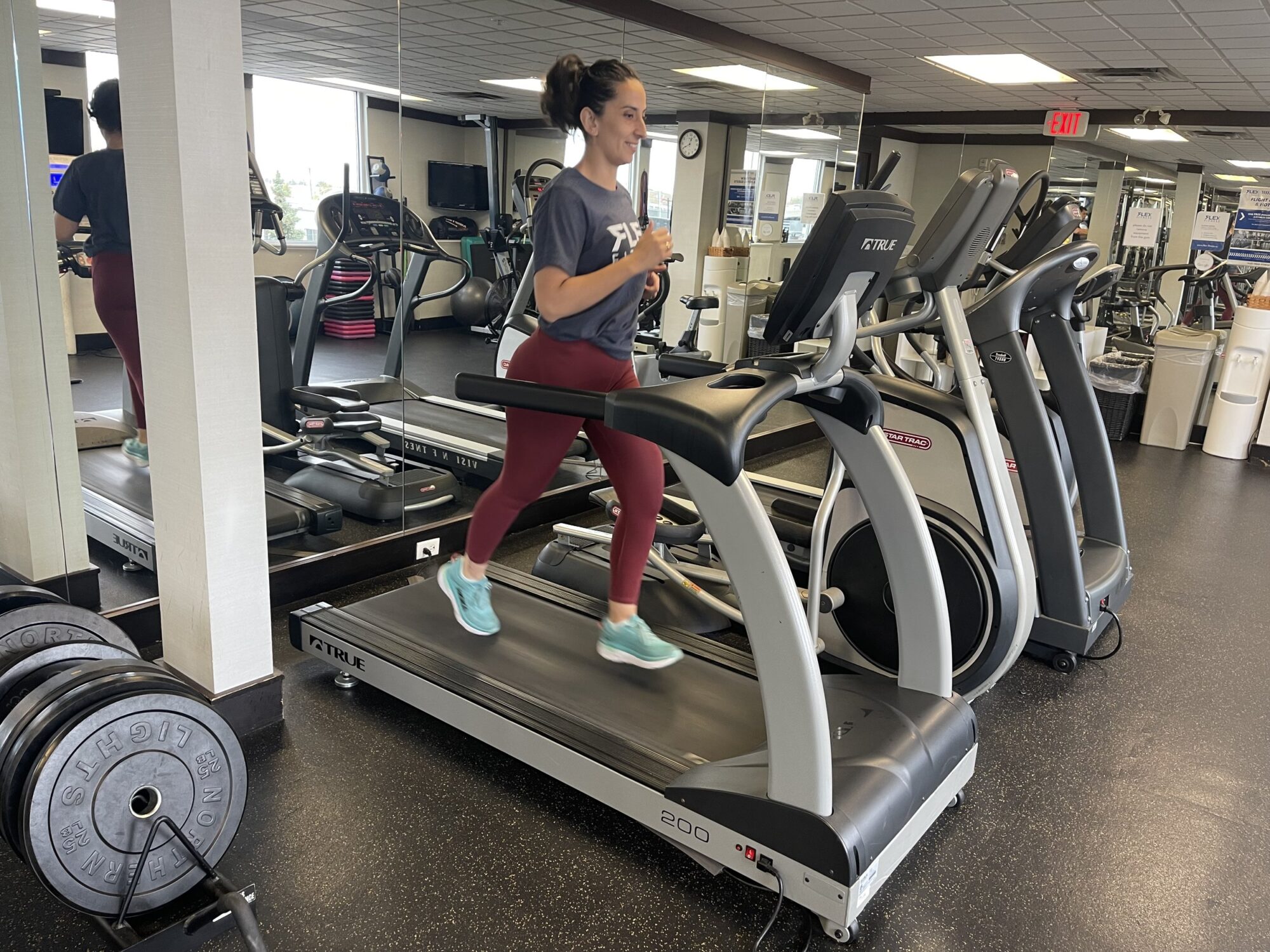
Generic workout videos can’t see how you move, and pregnancy is exactly the situation where individual guidance matters most. Flex Fitness offers dedicated pre and post-natal personal training with trainers who program around each trimester, your energy levels, and your specific goals — whether that’s staying active through pregnancy, rebuilding your core after birth, or both. Sessions run 1-on-1 at our Sargent Avenue gym near Polo Park, or through in-home personal training if leaving the house with a newborn (or in a snowstorm) isn’t happening.
If you’re new to structured training entirely, our beginner’s guide to working out is a good companion read — the fundamentals of starting slowly and building habits apply doubly during pregnancy.
Ready to talk it through? Book a free consultation and we’ll build a plan that fits your pregnancy, your schedule, and your provider’s guidance.
Frequently Asked Questions
Is it safe to exercise while pregnant?
For most uncomplicated pregnancies, moderate exercise is considered safe and beneficial — but always get clearance from your doctor or midwife first, since certain conditions change what’s appropriate. Once cleared, keep intensity moderate, avoid overheating and breath-holding, and stop if you notice bleeding, dizziness, pain, or other warning signs.
When can I start working out again after giving birth?
There’s no universal date — it depends on your delivery, your recovery, and your provider’s assessment, usually discussed at your postpartum checkup. Gentle pelvic floor breathing and short walks often come first, with strength work added gradually once you’re cleared. A C-section or complications typically mean a longer runway.
How do I know if I’m doing pelvic floor exercises correctly?
On a slow exhale, you should feel a gentle lift and drawing-up sensation at the base of your pelvis — never bearing down or clenching your glutes and holding your breath. If you can’t find the sensation, or you have leaking, pain, or pelvic pressure, ask your doctor for a referral to a pelvic floor physiotherapist for a proper assessment.
Does Flex Fitness offer prenatal personal training in Winnipeg?
Yes. Flex Fitness provides 1-on-1 pre and post-natal personal training at our gym at 1750 Sargent Avenue in Winnipeg, as well as in-home sessions. Programs are tailored to your stage of pregnancy or postpartum recovery and built to work alongside your healthcare provider’s guidance. Contact us for a free consultation.