
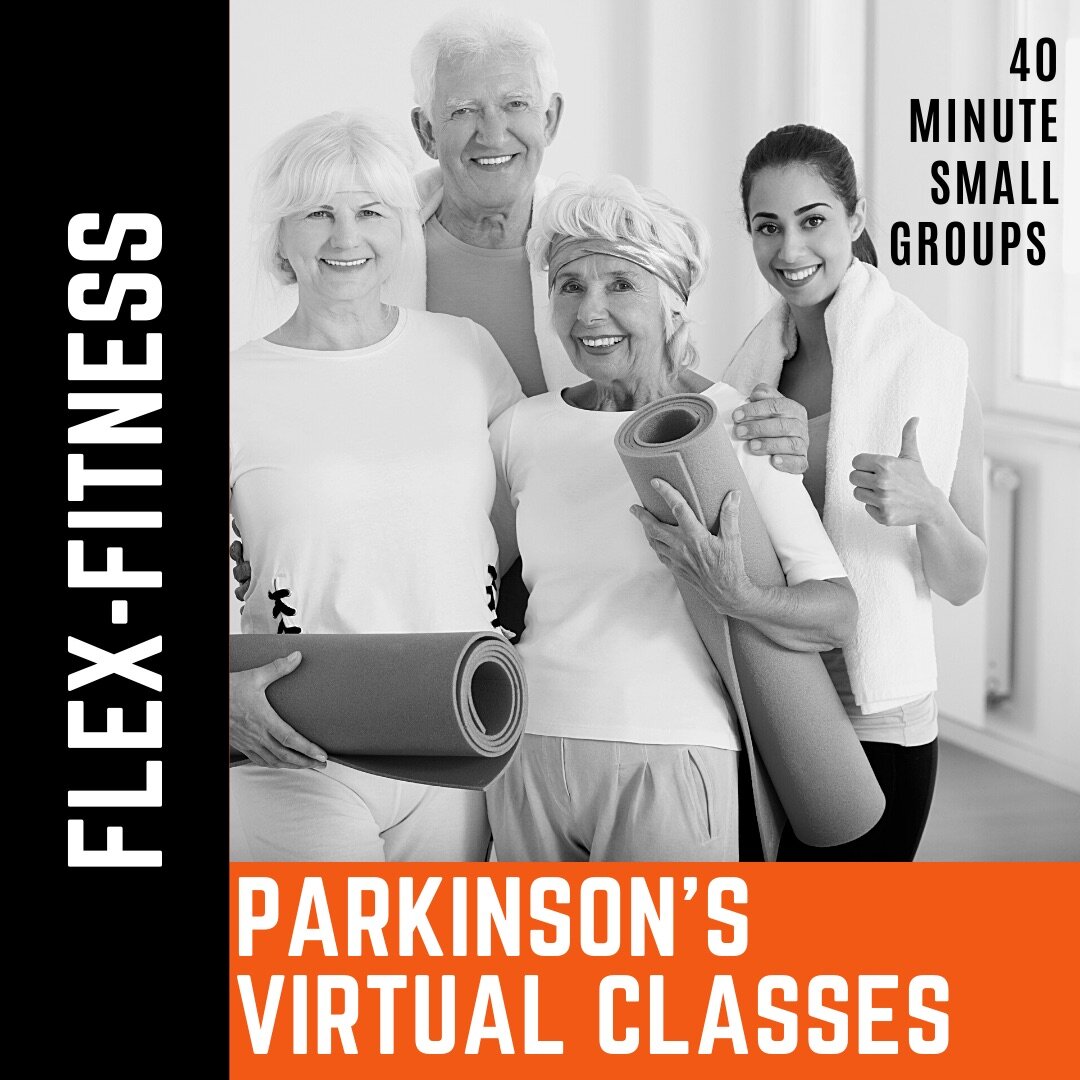
A Parkinson’s diagnosis changes a lot of things, but one of the most powerful tools for managing it is surprisingly simple: consistent, challenging exercise. At Flex Fitness, Parkinson’s exercise in Winnipeg has been part of our specialty programming for years — boxing, agility, gait and cognitive training designed specifically for people living with Parkinson’s disease and related conditions like Lewy body dementia. This guide covers what the research suggests, what a good program looks like, and why exercise matters more for every older adult, diagnosis or not. One thing up front: exercise supports symptom management and quality of life — it is not a cure, and it never replaces the plan you build with your physician and neurologist.
Why Exercise Matters for Parkinson’s Disease
Parkinson’s is a progressive neurological condition, and the number of people living with it is rising steadily — in Manitoba and across Canada. Research over the past decade has consistently found that regular, reasonably intense exercise is associated with better movement, better balance and better day-to-day function for people with Parkinson’s. Some studies suggest it may help slow the progression of motor symptoms, though scientists are still working out exactly how and how much.
What we see in practice lines up with the research. Clients who train consistently tend to report improvements in the areas Parkinson’s affects most:
- Rigidity and stiffness in the arms and legs
- Balance, gait and walking confidence
- Involuntary movement issues such as dyskinesia and dystonia
- Hand-eye coordination and reaction speed
- Mood, energy and cognitive sharpness
The key word is challenging. One of the biggest lessons from specialized Parkinson’s exercise education — including the “Exercise as a Primary Treatment” training our head trainer completed with NeuroFit BC — is that people with Parkinson’s should be treated like athletes. Gentle movement is better than nothing, but the best results come when you are genuinely pushed, safely, at a level matched to your abilities.
Parkinson’s Exercise in Winnipeg: What Our Programming Includes
Flex Fitness has real history with this population. We have run virtual Parkinson’s fitness classes, partnered with Parkinson Canada in Manitoba on small-group boxing workouts and community presentations, and delivered joint sessions with a registered dietitian on exercise and nutrition for people living with Parkinson’s. Every client starts with a detailed assessment so the program targets your specific symptoms and daily difficulties — not a generic template.
Boxing
Non-contact boxing has become one of the most popular forms of Parkinson’s exercise, and for good reason. The skills boxing trains — hand-eye coordination, foot speed, agility, rhythmic breathing, power and balance — are remarkably similar to the motor functions Parkinson’s gradually erodes. Researchers are still investigating exactly why boxing seems to help so much, but the overlap between what the sport demands and what the disease affects is hard to ignore. It is also a genuinely fun way to work out stress, and the social side of hitting pads with a trainer or partner matters more than people expect.
Agility, Gait and Balance Work
Shuffling steps, freezing and falls are among the most limiting Parkinson’s symptoms. We use agility drills, big exaggerated movements, direction changes and gait-specific exercises to retrain stride length, foot placement and confidence on your feet. Functional exercises that mimic everyday movements — standing from a chair, stepping over obstacles, reaching and turning — carry over directly into daily life.
Strength and Mobility
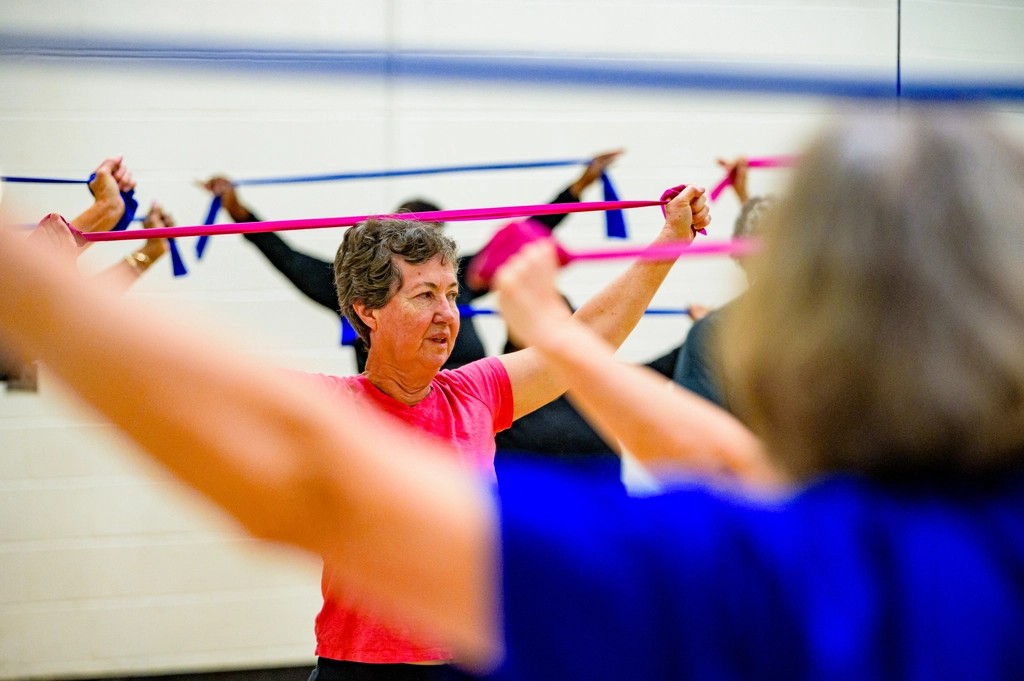
Strength training fights the rigidity and muscle loss that come with both Parkinson’s and normal aging, while mobility and flexibility work keeps joints moving through their full range. A balanced week touches boxing, agility, mobility, strength and cardiovascular training rather than leaning on any single method.
Cognitive Exercises
Parkinson’s and Lewy body dementia both affect thinking as well as movement, so we layer cognitive challenges on top of physical ones — counting patterns while moving, reacting to called-out cues, sequencing punch combinations from memory. Training the brain and body at the same time is harder than either alone, and that difficulty is exactly the point.
How Often Should You Train?
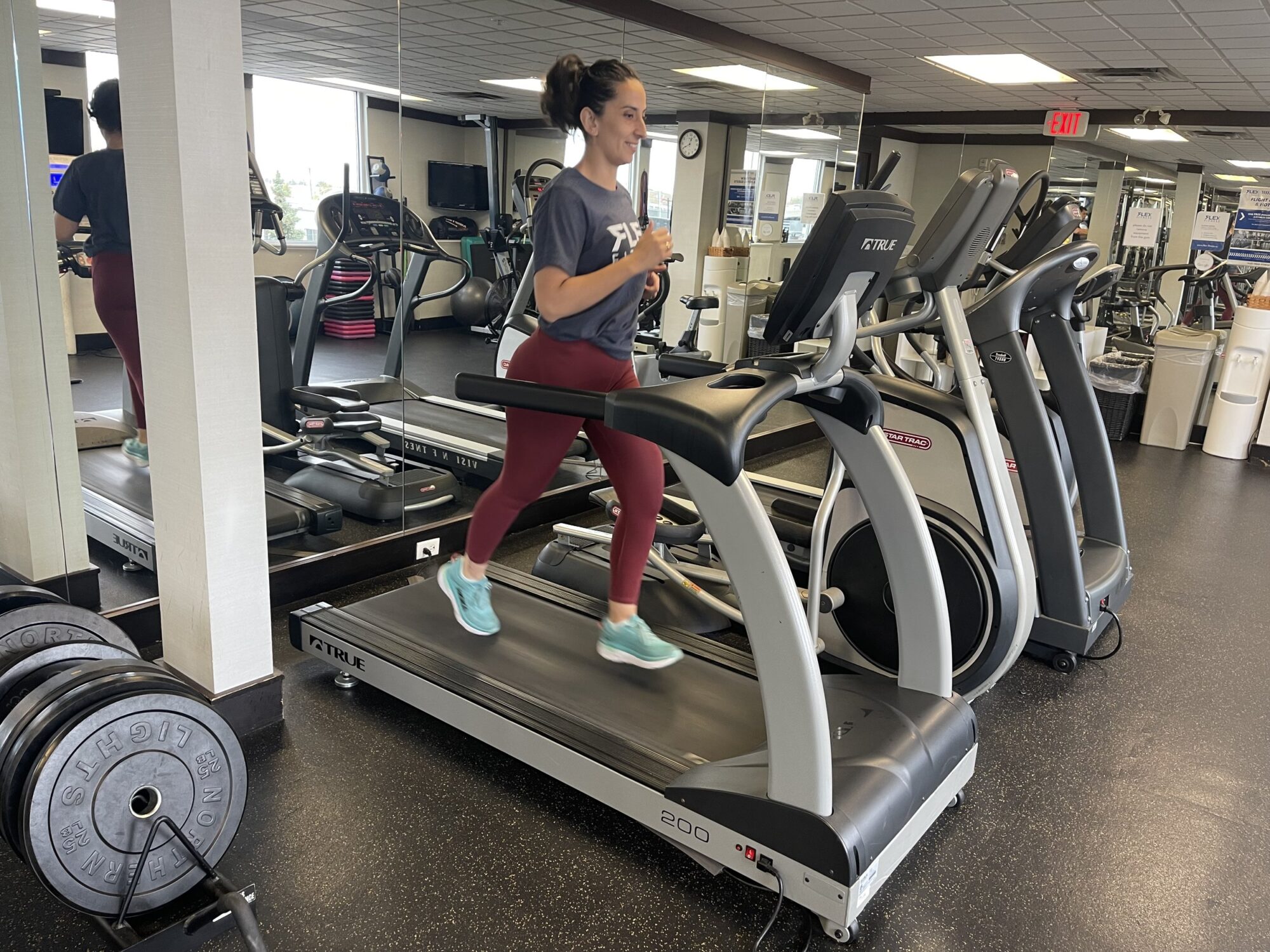
The general guidance we follow, and what much of the Parkinson’s exercise research points toward, is roughly five days per week of purposeful activity, 30 to 60 minutes at a time, at an intensity that genuinely challenges you. That does not mean five hard gym sessions — a mix of trainer-led workouts, home exercises and brisk walks counts. Two things make the biggest difference:
- Consistency. Benefits fade when training stops, so the routine has to be sustainable year-round — including through Winnipeg winters, when it is tempting to hibernate. Indoor sessions, in-home training and virtual options keep the streak alive when the sidewalks are ice.
- Accountability. Training with a professional, a friend or a small group dramatically improves the odds you actually show up. Homework between sessions — short daily exercise assignments — keeps momentum going on off days.
A Sample Boxing-Inspired Workout
Here is the kind of beginner-friendly circuit we use with Parkinson’s clients. Do each exercise in order, rest about two minutes, then repeat the circuit two to three times. Hydrate before, during and after.
- Shadow boxing — 25 punches per arm
- Overhead in-and-out arm drill — 20 reps
- Pad work: 1-2-3 punch combinations — 15 sets
- 1-2-3-4 punch-and-shuffle drill — 10 sets
- Plank with alternating arm/leg lift — 20 per side
- Side-to-side ducking drill — 20 reps
- Crunch with punch — 15 to 20 reps
- Wall slides — 50 reps
Adjust reps to your level, and if any movement feels unsafe, skip it and ask a professional to adapt it. Every exercise here can be modified — that is what an individual assessment is for.
Exercise for Dementia and Lewy Body Dementia
Our trainers also work with clients living with Lewy body dementia, which shares many symptoms with Parkinson’s: rigidity, balance and mobility problems, and memory loss. The training approach is similar — balance, strength, agility and mobility work combined with cognitive challenges — with the goal of helping maintain function and independence for as long as possible, and lifting mood along the way. Programs are built around each person’s abilities, and we coordinate with families and caregivers so the plan fits real life.
Why Every Older Adult Needs Exercise
You do not need a neurological diagnosis for training to matter more as you age — in some ways it matters most after retirement. Three reasons stand out:
- Bone density. Resistance training and weight-bearing cardio put compressive forces through your bones that signal them to stay strong, lowering fracture risk after a fall.
- Heart health. Consistent exercise paired with a balanced diet helps manage blood pressure and cholesterol — always in partnership with your doctor, never as a replacement for prescribed medication.
- Brain and mood. Exercise raises dopamine and supports cognition, memory and problem-solving — exactly the things aging chips away at.
Beyond the gym, the habits that protect quality of life as we age are not complicated: move daily for 30 minutes or more, build meals around whole foods most of the time, get outside (with sun protection), keep alcohol minimal, don’t smoke, sleep around eight hours, stay social, and keep your mind challenged with reading, music or good conversation. None of it is glamorous; all of it compounds. For more on sleep, stress and daily habits, see our everyday wellness guide.
How to Get Started Safely
If you or a family member has been diagnosed with Parkinson’s, the best approach is a team approach: your physician and neurologist guide medication and medical care, a dietitian can help with nutrition strategies, and a trainer experienced with Parkinson’s designs and progresses the exercise side. Follow your medication schedule exactly as prescribed, tell your care team you are starting a program, and start sooner rather than later — earlier is generally better when it comes to building the exercise habit.
At Flex Fitness, that starts with a detailed questionnaire and an in-person assessment of your movement, balance and specific challenges. From there we build a plan around 1-on-1 training at our Sargent Avenue gym near Polo Park, in-home sessions, or virtual coaching over video — whichever combination fits your mobility, transportation and comfort level. Families across Winnipeg have used all three, and many mix them as seasons and symptoms change.
Ready to see what a program built for you looks like? Contact us for a free consultation and we will go over your needs in detail.
Frequently Asked Questions
Can exercise cure Parkinson’s disease?
No. There is currently no cure for Parkinson’s. What research does support is that regular, challenging exercise can help manage symptoms — movement, balance, mood and daily function — and may help slow the progression of motor symptoms. Exercise works alongside your medical treatment, not instead of it, so always coordinate with your physician and neurologist.
Why is boxing recommended for Parkinson’s?
Non-contact boxing trains hand-eye coordination, foot agility, speed, breathing and strength — many of the same motor skills Parkinson’s progressively affects. Research on boxing for Parkinson’s is encouraging, and many people find it more engaging than conventional workouts, which makes it easier to stay consistent. It works best as part of a balanced program that also includes mobility, strength, cardio and cognitive work.
How much exercise does someone with Parkinson’s need?
A common target is about five days per week, 30 to 60 minutes per session, at an intensity that genuinely challenges you. Your ideal amount depends on your symptoms, fitness and medical guidance, which is why we assess every client individually before prescribing anything.
Do you offer Parkinson’s training options for people who can’t come to the gym?
Yes. Alongside 1-on-1 sessions at our Winnipeg gym, we offer in-home personal training and virtual sessions over video, and we have run virtual Parkinson’s fitness classes focused on mobility, agility, strength and hand-eye coordination. Contact us and we will find the format that works for your situation.