

Nothing derails progress faster than getting hurt. One nagging knee or a tweaked lower back can undo months of consistent training — and most of it is avoidable. In our experience coaching clients in Winnipeg, most gym injuries trace back to a few preventable mistakes: skipping warm-ups, rushing progress, ignoring warning signs and training with sloppy technique. This guide covers exercise injury prevention from every angle — warming up, stretching and mobility, telling normal soreness from a real problem, handling trouble spots like knees, shoulders, shins and the lower back, and rehabbing properly when something does go wrong.
Train Safely From Day One
Most injuries don’t happen because an exercise is dangerous. They happen because someone did too much, too soon, with technique that wasn’t ready for the load. When you start a new program, impatience is your biggest enemy.
The safer path is boring but it works:
- Start lighter than you think you need to. Let tendons, joints and connective tissue adapt — they strengthen more slowly than muscles do.
- Learn proper technique before adding weight. A movement pattern that’s slightly off at 20 pounds becomes an injury at 100 pounds.
- Set realistic goals. Small weekly improvements you can actually feel keep you consistent without tempting you to overreach.
- Get qualified eyes on your form. A personal trainer can spot and fix technique flaws long before they turn into pain.
If you’re brand new to training, our beginner’s guide to working out walks through those first months in detail.
Exercise Injury Prevention Starts With Your Warm-Up
A proper warm-up is the cheapest exercise injury prevention there is, and it takes five to ten minutes: raise your heart rate to roughly 60 percent of your max, increase blood flow to the muscles you’re about to use, and rehearse the movements you’re about to load.
That means a dynamic warm-up — movement, not holding stretches. Good options:
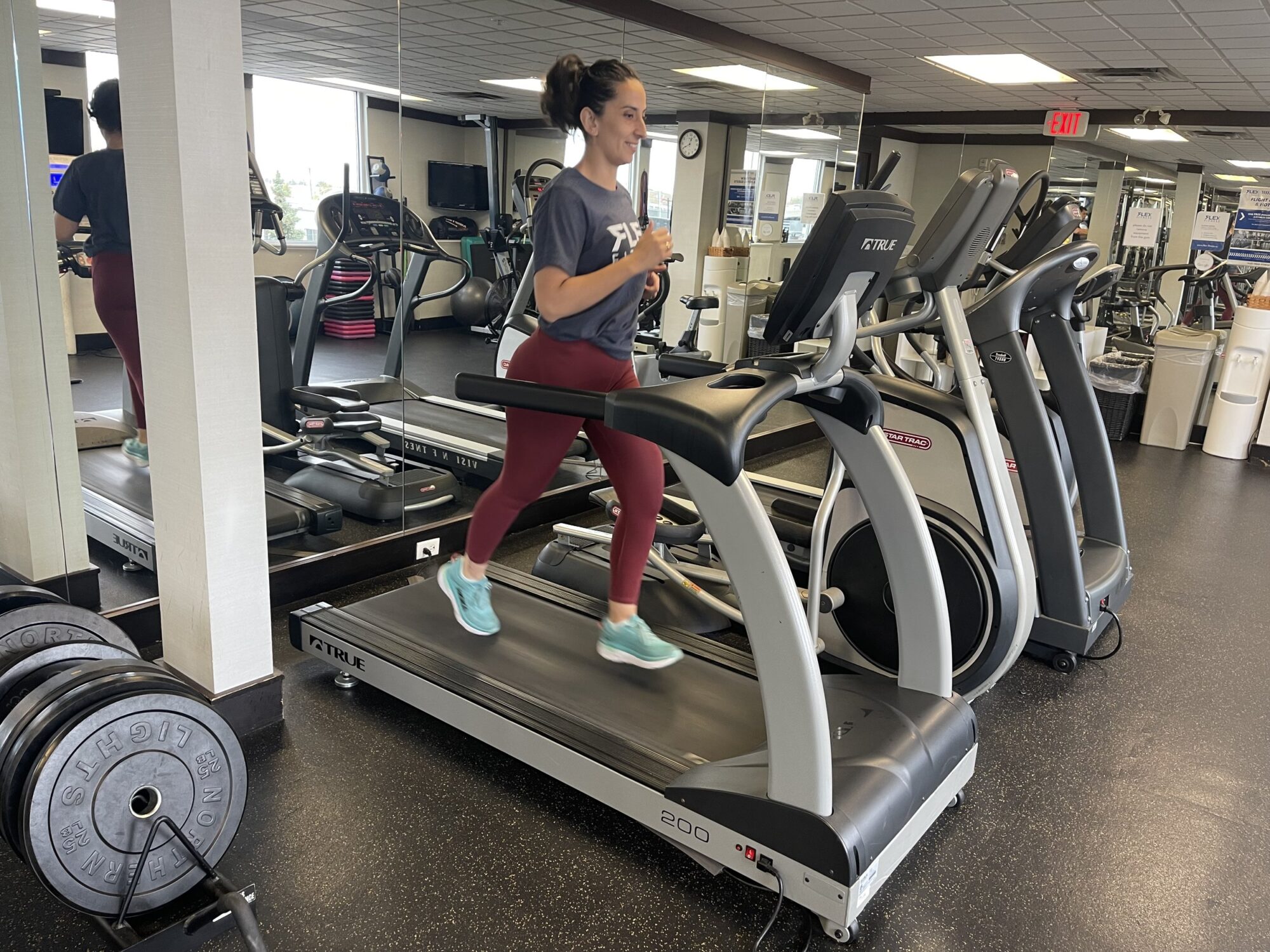
- Light cardio: brisk treadmill walk, easy bike, jumping jacks.
- Dynamic movements that mimic your workout: bodyweight squats before leg day, arm circles and band pull-aparts before pressing.
- A few mobility drills for the joints you’ll be working — hips, ankles, shoulders, thoracic spine.
Save static stretching (holding a stretch in one position) for after your session, when muscles are warm.
Stretching, Mobility and Posture
Stretching: when and how
Static stretching belongs at the end of your workout or as its own daily habit. Hold each stretch for about 30 seconds, exhale as you settle in, and cover every major muscle group you trained. Done consistently, stretching helps reduce tightness and post-workout soreness and keeps you moving well as you age. Staying hydrated helps too — dehydrated muscles cramp and tighten more easily.
Mobility training
Mobility work — actively moving your joints through their full range under control — deserves a spot in everyone’s routine, whatever your age or goals. Ten minutes a day of hip, ankle, shoulder and spine drills pays off in fewer aches, more resilient joints, better lifting positions and a lower injury risk overall — for everyone from athletes to desk workers.
Posture: the slow-motion injury
Hours of sitting pull your head forward and round your shoulders, and that misalignment changes which muscles fire when you train — a common root cause of shoulder and neck problems. The fix is two-part: stretch what’s tight (chest muscles and upper traps) and strengthen what’s weak (mid and lower traps, rear delts and rhomboids — wall slides are a great starting drill). Better alignment means fewer headaches, fewer aches and cleaner movement in the gym.
Sore or Injured? Know the Difference
Not every workout should leave you wrecked. Delayed onset muscle soreness (DOMS) — the dull ache that peaks a day or two after training something new or hard — is normal and settles on its own. Sharp pain, joint pain, swelling, or pain that arrived suddenly during a movement is different. That’s a warning, not a badge of honour.
A few rules that keep soreness in the healthy zone:
- Give a muscle group 24 to 48 hours before training it hard again.
- Sleep roughly 8 hours — that’s when the repair work happens.
- Warm up before and cool down after every session.
- Let your long-term goal set your intensity. Unless you’re a competitive athlete, you don’t need to bury yourself every workout. Train today so you can train tomorrow.
Common Trouble Spots and What Helps
Knee pain
If your knees complain during exercise, first shorten the range of motion — squat to a box instead of full depth — while you build strength around the joint. Warm up thoroughly before loading your knees, and stretch and strength-train regularly: strong quads, glutes and hamstrings are the best long-term protection knees can get.
Shoulder pain
The shoulder is the most mobile joint in the body, which also makes it one of the easiest to irritate — and it’s involved in nearly every upper-body exercise. Protect it with a consistent warm-up, daily mobility work through all the directions the joint moves, and strength training with strict technique. If a movement causes sharp pain, don’t push through it: modify the exercise, get the shoulder assessed by a professional, and follow the rehab plan you’re given.
Shin splints
Shin splint pain lives in the muscles and tendons around the tibia and is classically an overuse injury from running, jumping and other high-impact activity. Short term, the answer is relative rest, ice and adjusting your training. To keep them from coming back: build up impact volume gradually rather than in big jumps, add lower-leg strength work, wear shoes with proper arch support and cushioning, and clean up your running or landing mechanics.
Lower back pain — and Winnipeg’s shovelling season
Lower back injuries spike every winter in Winnipeg when the snow starts flying, and “shovelling is my exercise” is exactly the mindset that causes them. Shovelling is a repeated hinge-and-twist under load, and if the first heavy lifting your back does all year is a driveway full of wet snow, it will let you know. Train your core and full body year-round so shovelling day is easy. When you’re out there: lift with your legs and transfer the force through a braced core, exhale as you lift, take breaks, dress for the cold, drink water, and stretch afterward. And don’t be a hero — push snow instead of throwing it, and ask for help with the heavy stuff.
Carpal tunnel and wrist pain
Carpal tunnel syndrome — numbness, tingling and pain from a compressed nerve at the wrist — affects women more often than men, and diabetes and excess body weight raise the risk. Caught early, daily finger and wrist stretches, general activity and maintaining a healthy weight can meaningfully improve symptoms and may help you avoid surgery. If numbness persists or wakes you at night, see a doctor rather than waiting it out.
What to Do When You Get Injured
More than half of people try to train through the pain — the worst possible move, since you worsen the original injury and often create new problems as your body compensates. The smarter sequence:
- Stop the activity. Continuing is how a two-week problem becomes a two-month one.
- Get assessed. See a doctor or physiotherapist, urgently if the injury is severe — suspected fractures need immediate attention.
- Follow RICE in the acute phase: Rest, Ice, Compression, Elevation. For a lower-limb injury, get your weight off it and keep it elevated.
- Ice properly. You’ll feel four stages — cold, burning, aching, numb. Once it’s numb, the ice has done its job for that round.
- Follow professional advice to the letter. Compliance with your prescribed program is the biggest factor in how fast and how fully you recover.
Rehab Right: Coming Back Without Setbacks
Rehab goes one of two ways: a structured return that leaves you stronger, or a rushed one that re-injures you and restarts the clock. Three principles keep you on the right side of that line:
- Make an action plan. Work with your physio or trainer on a staged progression — what you can do this week, what has to wait — instead of guessing day to day.
- Listen to your body. Mild stiffness that eases as you move is usually fine; pain that sharpens or lingers means back off a stage.
- Think big picture. A week or two off is nothing across years of training; rushing back early and losing three months is the real cost.
An injury also doesn’t have to mean stopping entirely. A good coach programs around the injured area — training your lower body while a shoulder heals, for example — so you keep momentum. That’s a core part of how we build programs, whether in the gym, through virtual coaching or at home. Smart strength training is itself protective: stronger muscles, tendons and bones simply tolerate more before something gives.
Get a Program Built Around Your Body
Exercise injury prevention comes down to warm-ups done consistently, technique learned properly, loads progressed patiently and warning signs respected. You don’t have to figure it out alone: our Winnipeg trainers assess how you move, build a program around your history and any current aches, and coach your technique every session. If pain has been holding you back, contact us for a free consultation.
Frequently Asked Questions
Should I stretch before or after a workout?
Do a dynamic warm-up before training — light cardio and movements that mimic your workout — and save static stretching for afterward, holding each stretch about 30 seconds. Static stretching on cold muscles before lifting isn’t the best use of your time; done after, it helps reduce tightness and next-day soreness.
How do I know if it’s normal soreness or an injury?
Normal soreness (DOMS) is a dull, general ache in the muscle that shows up a day or two after training and fades within a few days. Sharp pain, pain inside a joint, swelling, or pain that started suddenly mid-exercise points to an injury — stop the activity and get it assessed rather than training through it.
Can I still work out with an injury?
Usually yes — around it, not through it. Once a professional has assessed the injury, a trainer can program exercises that let the injured area recover while the rest of your body keeps training. What you shouldn’t do is load the injured area through pain, which delays healing and often creates new problems elsewhere.
What should I do immediately after injuring myself?
Stop the activity, and in the acute phase follow RICE: rest, ice, compression, elevation. When icing, expect four sensations — cold, burning, aching, then numb. See a doctor or physiotherapist for anything beyond a minor strain, and follow their rehab plan closely — that’s the biggest factor in a fast, full recovery.